Everytable

Web & Mobile · Next.js · React Native

Web & Mobile · Next.js · React Native
Everytable is a Los Angeles-based social enterprise on a mission to make fresh, nutritious food accessible to everyone. With 38 locations across Southern California — including food deserts and underserved communities — the platform handles online ordering, delivery, subscriptions, and a social equity franchise program. The company needed a custom-built admin panel, a performant web frontend, and the foundation for a mobile app to support its growing operation.
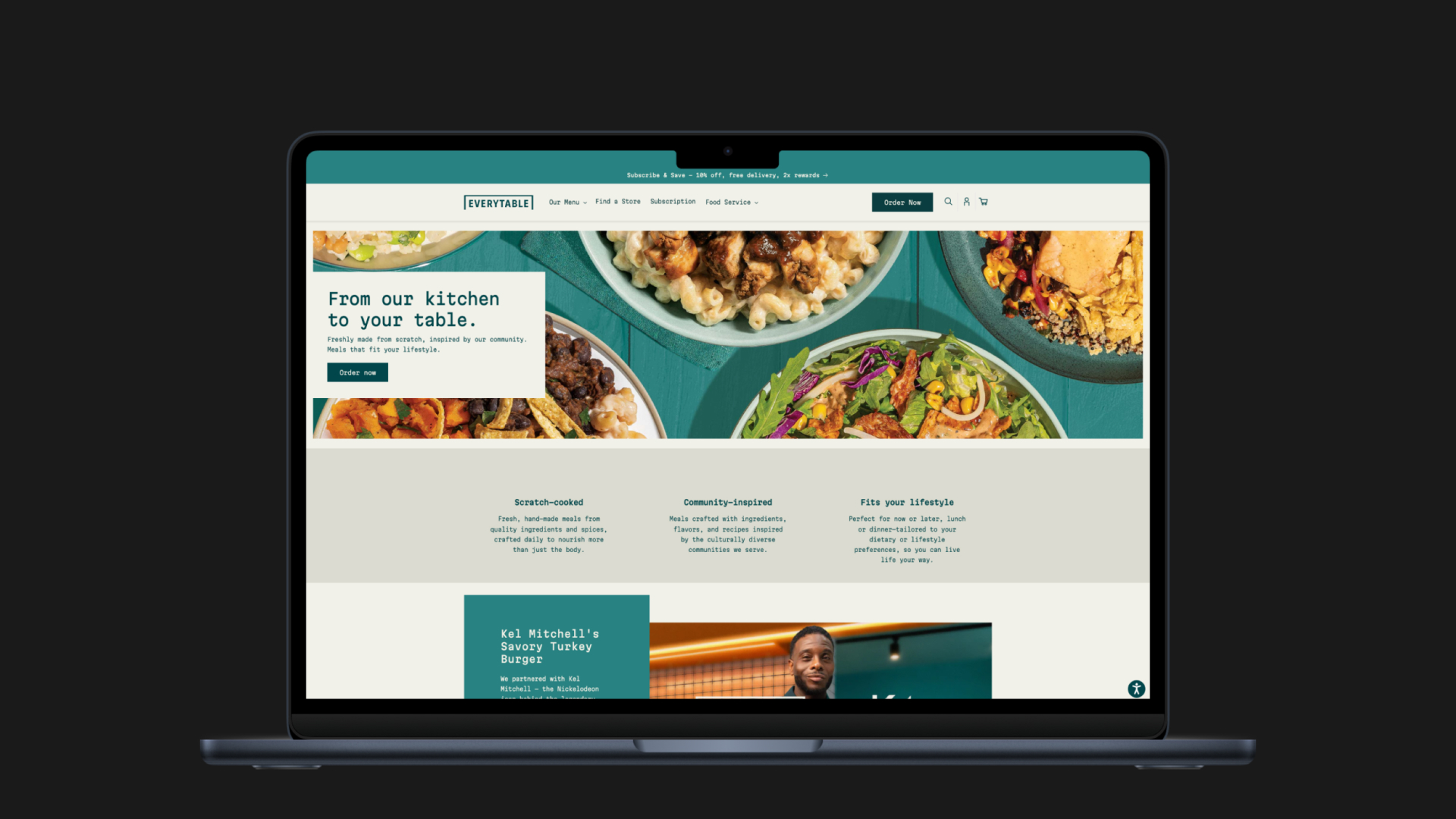
Everytable's operation couldn't rely on off-the-shelf solutions. Regional pricing that changes by neighbourhood, a subscription model with flexible delivery logic, discount processing, and product management across 38 locations — all of it required a custom-built platform. The company needed an admin panel for internal operations, a fast web frontend for customers, and the groundwork for a mobile app — all developed in parallel.
Built the entire frontend of the admin panel from scratch. The most demanding part was organising the product management interface — paginated tables with filters and search across a large product catalogue, structured so the internal team could manage inventory, pricing, and availability without engineering support. API logic was separated into its own layer, Redux actions and selectors into another, and components on top — a clean architecture designed to scale as the platform grew.
Contributed to key parts of the customer-facing web application. Worked on the Redux state architecture — how product data is stored, cached, and invalidated. Implemented debounce logic for rapid user interactions like adding items to cart, preventing unnecessary API calls when a customer repeatedly hits the quantity button. Built discount code processing and cart calculation logic, ensuring accurate totals regardless of combination — regional pricing, subscriptions, promotions, and delivery fees all factored in.
Set up the initial structure for the React Native mobile app — navigation architecture, Redux state management, and Axios API layer definitions. Established the patterns and conventions that the rest of the mobile development would follow.